UGA

Monday, July 6, 2015

The Case for a Creator: A Journalist Investigates Scientific Evidence That Points Toward God

The Case for a Creator: A Journalist Investigates Scientific Evidence That Points Toward GodThe Case for a Creator: A Journalist Investigates Scientific Evidence That Points Toward God by Lee Strobel

My rating: 4 of 5 stars


As most of you know Lee Strobel has written several "The Case for ..." books. This one is very good. I don't necessaryly like his writing style but the information in is books are great. It takes me a little bit longer to read his books than most books I read but it is worth it. You will get a great taste for the book from the quotes below. I trust they will either encorage you or challenge your belief. Enjoy!

William Provine of Cornell University said, “If Darwinism is true, then there are five inescapable conclusions:
• there’s no evidence for God
• there’s no life after death
• there’s no absolute foundation for right and wrong
• there’s no ultimate meaning for life
• and people don’t really have free will.”

It is hard to resist the impression that the present structure of the universe, apparently so sensitive to minor alterations in numbers, has been rather carefully thought out. … The seemingly miraculous concurrence of these numerical values must remain the most compelling evidence for cosmic design. ~Physicist Paul Davies

Would it not be strange if a universe without purpose accidentally created humans who are so obsessed with purpose? ~Sir John Templeton

… all the seemingly arbitrary and unrelated constants in physics have one strange thing in common – these are precisely the values you need if you want to have a universe capable of producing life. ~Patrick Glynn

In his book God: The Evidence, [Patrick] Glynn credits the absolutely incredible fine-tuning of the cosmos as being among the key reasons why he concluded that the universe must have been the handiwork of a master designer.

A universe aiming at the production of man implies a mind directing it. Though man is not at the physical center of the universe, he appears to be at the center of its purpose. ~Robert Augros

When scientists talk about the fine-tuning of the universe they’re generally referring to the extraordinary balancing of the fundamental laws and parameters of physics and the initial conditions of the universe. Our minds can’t comprehend the precision of some of them. The result is a universe that has just the right conditions to sustain life. The coincidences are simply too amazing to have been the result of happenstance. ~Robin Collins … as Paul Davies said, “the impression of design is overwhelming.”

As scientific knowledge grew, dreams of finding lunar civilizations dissipated. Everyone came to agree that the moon cannot support life. Yet surprising discoveries in recent years have shown the opposite to be true: the moon really does support life – ours! Scientific evidence confirms how this parched, airless satellite actually contributes in unexpected ways to creating a lush and stable environment a quarter of a million miles away on Earth. ~Lee Strobel

There was a remarkable finding that the moon actually stabilizes the tilt of the earth’s axis. The tilt is responsible for our seasons. During the summer, in the northern hemisphere the north pole axis is pointed more toward the sun. Six months later, when the Earth is on the other side of the sun, then the south pole is more pointed toward the sun. While the Earth’s tilt at 23.5 degrees, this gives us very mild seasons. So in a very real way, the stability of our climate is attributable to the moon. ~Guillermo Gonzalez

What would happen if the moon were not there? Then our tilt could swing wildly over a large range, resulting in major temperature swings. If our tilt were more like ninety degrees, the north pole would be exposed to the sun for six months, while the south pole would be in darkness, then vice-versa. Instead, it varies by only about one and a half degrees – just a tiny variation, because the gravity from the moon’s orbit keeps it stabilized. ~Guillermo Gonzalez

We are, by astronomical standards, a pampered, cossetted, cherished group of creatures; our Darwinian claim to have done it all ourselves is as ridiculous and as charming as a baby’s brave efforts to stand on its own feet and refuse his mother’s hand. If the universe had not been made with the most exacting precision we could never have come into existence. It is my view that these circumstances indicate the universe was created for man to live in. ~John A. O’Keefe

If God so precisely and carefully and lovingly and amazingly constructed a mind-boggling habitat for his creatures, then it would be natural for Him to want them to explore it, to measure it, to investigate it, to appreciate it, to be inspired by it – and ultimately, and most importantly, to find Him through it. ~Lee Strobel

We have always underestimated the cell. … The entire cell can be viewed as a factory that contains an elaborate network of interlocking assembly lines, each of which is composed of a set of large protein machines. … Why do we call [them] machines? Precisely because, like machines invented by humans to deal efficiently with the macroscopic world, these protein assemblies contain highly coordinated moving parts. ~Bruce Alberts, President, National Academy of Sciences

We should reject, as a matter of principle, the substitution of intelligent design for the dialogue of chance and necessity; but we must concede that there are presently no detailed Darwinian accounts of the evolution of any biochemical system, only a variety of wishful speculations. ~Biochemist Franklin M. Harold

One scientist described a singled-celled organism as a high-tech factory, complete with artificial languages and their decoding systems, memory banks for information storage and retrieval, elegant control systems regulating the automated assembly of parts and components, error fail-safe and proof-reading devices utilized for quality control, assembly processes involving the principle of prefabrication and modular construction … [and] a capacity not equaled in any of our own most advanced machines, for it would be capable of replicating its entire structure within a matter of a few hours. ~Lee Strobel

Today we buy information, we sell it, we regard it as commodity, we value it, we send it down wires and bounce it off satellites – and we know it invariably comes from intelligent agents. So what do we make of the fact that DNA stores far more information in a smaller space than the most advanced supercomputer on the planet? ~Lee Strobel

Wilder Penfield, the renowned father of modern neurosurgery, has encountered concrete evidence that the brain and mind are actually distant from each other, although they clearly interact.

At this point, having considered J.P. Moreland’s critique of physicalism. I wanted to hear his affirmative case that consciousness and the souls are immaterial entities. “What positive evidence is there that consciousness and the self are not merely a physical process of the brain?” I [Lee Strobel] asked.

“We have experimental data, for one thing,” he replied. “For example, neurosurgeon Wilder Penfield electrically stimulated the brains of epilepsy patients and found he could cause them to move their arms or legs, turn their heads or eyes, talk, or swallow. Invariably the patient would respond by saying, ‘I didn’t do that. You did.’ According to Penfield, ‘the patient thinks of himself as having an existence separate from his body.’

“No matter how much Penfield probed the cerebral cortex, he said, ‘There is no place … whose electrical stimulation will cause a patient to believe or to decide.’ That’s because those functions originate in the conscious self, not the brain.

“A lot of subsequent research has validated this. When Roger Sperry and his team studied the differences between the brain’s right and left hemispheres, they discovered the mind has a causal power independent of the brain’s activities. This led Sperry to conclude materialism was false.”

The portrait of the Creator that emerges from the scientific data is uncannily consistent with the description of the God whose identity is spelled out in the pages of the Bible.
• Creator? “In the beginning You laid the foundations of the earth, and the heavens are the work of Your hands.”
• Unique? “You were shown these things so that you might know that the Lord is God; besides Him there is no other.”
• Uncaused and timeless? “Before the mountains were born or You brought forth the earth and the world, from everlasting to everlasting You are God.”
• Immaterial? “God is spirit.”
• Personal? “I am God Almighty.”
• Freedom of will? “And God said, ‘Let there be light,’ and there was light.”
• Intelligent and rational? “How many are Your works, O Lord! In wisdom You made them all; the earth is full of Your creatures.”
• Enormously powerful? “This Lord is … great in power.”
• Creative? “For You created my inmost being; You knit me together in my mother’s womb. I praise You because I am fearfully and wonderfully made; Your works are wonderful, I know that full well.”
• Caring? “The earth is full of His unfailing love.”
• Omnipresent? “The heavens, even the highest heaven, cannot contain You.”
• Has given humankind purpose? “For everything, absolutely everything, above and below, visible and invisible, … everything got started in Him and finds its purpose in Him.”
• Provides for life after death? “He will sallow up death forever.”
As the apostle Paul wrote two millennia ago: “For since the creation of the world God’s invisible qualities – His eternal power and divine nature – have been clearly seen, being understood from what has been made [that is, His creation], so that men are without excuse.” ~ Lee Strobel

James Tour of Rice University said, “Only a rookie who knows nothing about science would say science takes away from faith. If you really study science, it will bring you closer to God.” Astrophysicist and priest George Coyne put it this way, “Nothing we learn about the universe threatens our faith. It only enriches it.”

Polkinghome, who achieved acclaim as a mathematical physicist at Cambridge before becoming a full-time minister, the same kind of thinking he uses in science has helped him draw life-changing conclusions about God: “ No one has ever seen a quark, and we believe that no one ever will. They are so tightly bound to each other inside the protons and neutrons that nothing can make them break out on their own. Why, then, do I believe in these invisible quarks? … In summary, it’s because quarks make sense of a lot of direct physical evidence. … I wish to engage in a similar strategy with regard to the unseen reality of God. His existence makes sense of many aspects of our knowledge and experience: the order and fruitfulness of the physical world; the multilayered character of reality; the almost universal human experiences of worship and hope; the phenomenon of Jesus Christ (including His resurrection). I think that very similar thought processes are involved in both cases. I do not believe that I shift in some strange intellectual way when I move from science to religion. … In their search for the truth science and faith are intellectual cousins under the skin.”

Religious knowledge is more demanding than scientific knowledge. While it requires scrupulous attention to matters of truth, it also calls for the response of commitment to the truth discovered. ~ Polkinghome

Many have found that the awesome sight of the star-studded heavens evoke a sense of wonder, an awareness of transcendence, which is charged with spiritual significance. Yet the distant shimmering of stars does not itself create this sense of longing; it merely exposes what is already there. They are catalysts for our spiritual insights, revealing our emptiness and compelling us to ask whether and how this void might be filled.

Might our true origins and destiny somehow lie beyond these stars? Might there not be a homeland, from which we are presently exiled and to which we secretly long to return? Might not our accumulation of discontentment and disillusionment with our present existence be a pointer to another land where our true destiny lies and which is able to make its presence felt now in this haunting way?

Suppose that this is not where we are meant to be but that a better land is at hand? We don’t belong here. We have somehow lost our way. Would not this make our present existence both strange and splendid? Strange, because it is not where our true destiny lies; splendid, because it points ahead to where that real hope might be found. The beauty of the night skies or a glorious sunset are important pointers to the origins and the ultimate fulfillment of our heart’s deepest desires. But if we mistake the signpost for what is signposted, we will attach our hopes and longings to lesser goals, which cannot finally quench our thirst for meaning. ~Alister McGrath

View all my reviews

To order a copy of this book click here!

Tuesday, June 16, 2015

Please be in prayer for my daughter and her husband and his family. His mother is close to death. Many financial needs. A GoFundMe has been set up. Please feel free to share and help if you can. Here is the link.

UPDATE: Ellen went to be with her Lord Jesus on June 18, 2015!

Sunday, June 7, 2015

Vanishing Grace: What Ever Happened to the Good News?

Vanishing Grace: What Ever Happened to the Good News?Vanishing Grace: What Ever Happened to the Good News? by Philip Yancey
My rating: 5 of 5 stars

I love to read Philip Yancey. He always makes me think. This book was no exception. I highly recommend this book to everyone. I have lots of quotes to share. I trust they will challange you! Enjoy!

The Quakers have a saying: “An enemy is one whose story we have not heard.” To communicate to post-Christians, I must first listen to their stories for clues to how they view the world and how they view people like me.   ~Philip Yancey

… the issue is not whether I agree with someone but rather how I treat someone with whom I profoundly disagree. We Christians are called to use the “weapons of grace,” which means treating even our opponents with love and respect.    ~Philip Yancey

Often, it seems, we’re [Christians] perceived more as guilt dispensers than as grace dispensers.  ~Philip Yancey

God, help me to see others not as enemies or as ungodly but rather as thirsty people. And give me the courage and compassion to offer your Living Water, which alone quenches deep thirst.  ~Henri Nouwen

… the core problem with Christians communicating faith: we do not always do so in love. That is an indispensable point to presenting faith in a grace-full way. ~Philip Yancey

Christians fail to communicate to others because we ignore basic principles in relationship. When we make condescending judgments or proclaim lofty words that don’t translate into action, or simply speak without first listening, we fail to love – and thus deter a thirsty world from Living Water. The good news about God’s grace goes unheard.  ~Philip Yancey

According to Jonathan Sacks, the former chief rabbi of Great Britain. “The Hebrew [Old Testament] in one verse commands, ‘You shall love your neighbor as yourself,’ but in no fewer than 36 places commands us to ‘love the stranger.’” He adds, “The supreme religious challenge is to see God’s image in one who is not in our image.”  ~Philip Yancey

Love has the power to win over the stranger. A news event in 1995 shocked both sides in the culture wars controversy. Norma Leah McCorvey, the “Jane Doe” of the famous Roe v. Wade Supreme Court case of 1973, converted to Christ, got baptized, and joined the pro-life campaign. Most astoundingly, it was the director of the anti-abortion group Operation Rescue who influenced her. As she tells the story, the change occurred when that director stopped treating her like an antagonist. He apologized for publicly calling her “baby killer” and started spending time with her during her smoking breaks in the parking lot that, oddly enough, their offices shared. In time, McCorvey accepted an invitation to church from a seven-year-old girl, whose mother also worked at Operation Rescue. Pro-abortion forces had dismissed McCorvey – her dubious past of drug-dealing, alcohol, and promiscuity made bad public relations – but Christian leaders took the time to counsel her in the faith while keeping her out of the spotlight for some time.  In a command found in no other religion, Jesus bids us to show love not only to strangers and sinners but also to our outright adversaries.  ~Philip Yancey

The more we love, and the more unlikely people we love, the more we resemble God – who, after all, loves ornery creatures like us.  ~Philip Yancey

… learning humility is a prerequisite for grace.  ~Philip Yancey

Henri Nouwen says, “When we come to realize that … only God saves, then we are free to serve, then we can live truly humble lives.” Nouwen changed his approach from “selling pearls,” or peddling the good news, to “hunting for the treasure” already present in those he was called to love – a shift from dispensing religion to dispensing grace. It makes all the difference in the world whether I view my neighbor as a potential convert or as someone whom God already loves.  ~Philip Yancey

… the approach of admitting our errors, besides being most true to a gospel of grace, is also most effective at expressing who we are. Propaganda turns people off; humbly admitting mistakes disarms.  ~Philip Yancey

The uncommitted share many of our core values, but if we do not live out those values in a compelling way, we will not awaken a thirst for their ultimate Source.  ~Philip Yancey

… we need to reclaim the “goodnewness” of the gospel, and the best place to start is to rediscover the good news ourselves.  ~Philip Yancey

The Christian sees the world as a transitional home badly in need of rehab, and we are active agents in that project.  ~Philip Yancey

We respond to healing grace by giving it away.  ~Philip Yancey

An alcoholic friend once made this point by comparing church with AA, which had become for him a substitute church. “When I show up late to church, people turn and look at me. Some scowl, some smile a self-satisfied smile – See that person’s not as responsible as I am. In AA, if I show up late the meeting comes to a halt and everyone jumps up to greet me. They realize that my desperate need for them won out over my desperate need for alcohol.”  ~Philip Yancey

Ignatius of Loyola defined sin as refusing to believe that God wants my happiness and fulfillment. Human rebellion began in the Garden of Eden when said in effect, “Trust me. I know what is best for you.”  ~Philip Yancey

Unless we love natural goods – sex, alcohol, food, money, success, power – in the way God intended, we become their slaves, as any addict can attest.  ~Philip Yancey

Eugene Peterson points out that “the root meaning in Hebrew of salvation is to be broad, to become spacious, to enlarge. It carries the sense of deliverance from an existence that has become compressed, confined and cramped.” God wants to set free, to make it possible for us to live open and loving lives with God and our neighbors. “I run in the path of your commands, for you have set my heart free,” wrote the psalmist.  ~Philip Yancey

Perhaps the most powerful thing Christians can do to communicate to a skeptical world is to live fulfilled lives, exhibiting proof that Jesus’ way truly leads to a life most abundant and most thirst-satisfying.  ~Philip Yancey

I have come to think that the challenge confronting Christians is not that we do not believe what we say, though that can be a problem, but that what we say we believe does not seem to make any difference for either the church or the world. ~Stanley Hauerwas

I am convinced that if we lose kids to the culture of drugs and materialism, of violence and war, it’s because we don’t dare them, not because we don’t entertain them. It’s because we make the gospel too easy, not because we make it too difficult. Kids want to do something heroic with their lives, which is why they play video games and join the army. But what do they do with a church that teaches them to tiptoe through life so they can arrive safely at death?  ~Shane Claiborne

We should live in such a way that our lives wouldn’t make much sense if the gospel were not true.  ~Dorothy Day

Jesus once asked His disciples, “For who is greater, the one who is at the table or the one who serves?” In that society, rife with slaves and servants, the question probably sounded rhetorical, if not ridiculous. No one envied a servant. Yet Jesus went on to say, “But I am among you as one who serves.” By serving others we follow Jesus, building up His kingdom step-by-step.   ~Philip Yancey

While discussing the growing antipathy toward Christians, a friend remarked to me, “There are three kinds of Christians that outsiders to the faith still respect: pilgrims, activists, and artists. The uncommitted will listen to them far sooner than to an evangelist or apologist.” Although nonbelievers do not oppose a spiritual search, they will listen only to those Christians who present themselves as fellow pilgrims on the way rather than as part of a superior class who has already arrived. Activists express their faith in the most persuasive way of all, by their deeds. And art succeeds when it speaks most authentically to the human condition when believers do so with skill, again the world takes note.   ~Philip Yancey

The church is, above all, a place to receive grace: it brings forgiven people together with the aim of equipping us to dispense grace to others.  ~Philip Yancey

“Lord, are you at this time going to restore the kingdom to Israel?” were the disciples’ last words to Jesus, and it was left to the angels to provide an indirect answer: “Why do you stand here looking into the shy?” Get moving – you’re the main actors now.   ~Philip Yancey

Again and again I tell God I need help, and God says, “Well isn’t that fabulous? Because I need help too. So you go get that old woman over there some water, and I’ll figure out what we’re going to do about your stuff.”   ~Anne Lamott

Go out into the world uncorrupted, a breath of fresh air in this squalid and polluted society. Provide people with a glimpse of good living and of the living God.  ~Eugene Peterson

Early in her career Mother Teresa of Calcutta was struck by Jesus’ words on the cross: “I thirst.” For her they came to symbolize not just physical thirst but God’s own thirst to draw humanity close. She made “I thirst” the motto for the Sisters of Charity, ordering those words to be displayed in every chapel of the society. “We carry in our body and soul the love of an infinite thirsty God,” she wrote one sister. “God thirsts. God thirsts for us and humanity thirsts for God.” God thirsts not out of need but out of desire, for God’s essence is love.  ~Philip Yancey

We lead our lives well when we love God with our whole being and when we love neighbors as we (properly) love ourselves.  ~Miroslav Volf

We, Jesus’ followers, are the agents assigned to carry out God’s will on earth. Too easily we expect God to do something for us when instead God wants to do it through us.  ~Philip Yancey

We preach sermons, write books on apologetics, conduct city-wide evangelistic campaigns. For those alienated from the church, that approach no longer has the same drawing power. And for the truly needy, words alone don’t satisfy; “A hungry person has no ears,” as one relief worker told me.  A skeptical world judges the truth of what we say by the proof of how we live.  ~Philip Yancey

The church works best not as a power center, rather as a countercultural community – in the world but not of it – that shows others how to live the most fulfilled and meaningful life on earth. In modern society that means rejecting the false gods of independence, success, and pleasure and replacing them with love for God and neighbor.  ~Philip Yancey

One Harlem preacher likens us to the pink plastic spoons at Baskin Robbins: we give the world a foretaste of what lies ahead, the vision of the Biblical prophets. In a world gone astray we should be activity demonstrating here and now God’s will for the planet.  ~Philip Yancey

Sacred music called the classical composers to their highest artistic achievements. Of his hundreds of works Beethoven wrote only two masses, yet he judged one of them, Missa Solemnis, his greatest composition. In their oratorios Handel and Mendelssohn served almost as evangelists, presenting the Biblical stories and themes in colorfully staged epics. Mozart and Haydn drifted toward religious themes mainly for economic reasons, as commissions for church events made it worthwhile. Even so, Mozart was so obsessed with the Requiem Mass he was striving to finish before his death that his doctor tried to take the manuscript away from him to enforce rest.  ~Philip Yancey

We cannot expect art always to uplift and inspire. In the words of Alan Paton, literature “will illuminate the road, but it will not lead the way with a lamp. It will expose the crevasse, but not provide the bridge. It will lance the boil, but not purify the blood. It cannot be expected to do more than this; and if we ask it to do more, we are asking too much.  ~Philip Yancey

We have taller buildings but shorter tempers; wider freeways but narrower viewpoints; we spend more but have less; we buy more but enjoy it less; we have bigger houses and smaller families; more conveniences, yet less time; we have more degrees but less sense; more knowledge but less judgment; more experts, yet more problems; we have more gadgets but less satisfaction; more medicine, yet less wellness; we take more vitamins but see fewer results. We drink too much; smoke too much; spend too recklessly; laugh too little; drive too fast; get too angry quickly; stay up too late; get up too tired; read too seldom; watch TV too much and pray too seldom. We have multiplied our possessions, but reduced our values; we fly in faster planes to arrive there quicker, to do less and return sooner; we sign more contracts only to realize fewer profits; we talk too much; love too seldom, and lie too often. We’ve learned how to make a living, but not a life; we’ve added years to life, not life to years.  ~”The Paradox of Our Time” by Dr. Bob Moorehead

Faith is not simply a private matter, or something we practice once a week at church. Rather, it should have a contagious effect on the broader world. Jesus used these images to illustrate His kingdom.: a sprinkle of yeast causing the whole loaf to rise, a pinch of salt preserving a slab of meat, the smallest seed in the garden growing into a great tree in which birds of the air come to nest.   ~Philip Yancey

John Wesley taught that the gospel of Christ involved more than saving souls. It should have an impact on all of society, and his followers worked to accomplish just that. They were dispensing grace to the broader world, and in the process their spirit helped change a nation, saving it from the revolutionary chaos that had spread across Europe.  ~Philip Yancey

The reason we fear to go out after dark is not that we may be set upon by bands of evangelicals and forced to read the New Testament, but that we may be set upon by gangs of feral young people who have been taught that nothing is superior to their own needs or feelings.  ~David C. Stolinsky (Jewish medical educator)

In early 2014 Christianity Today published a cover story on a sociologist named Robert Woodberry, who had wondered why some countries take democracy so well while their next door neighbors wallow in corruption and bad government. Painstaking research led him to conclude that missionaries made the difference. They taught people to read, built hospitals, and gave a biblical foundation for basic human rights. He concluded, “Areas where Protestant missionaries had a significant presence in the past are on average more economically developed today, with comparatively better health, lower infant mortality, lower corruption, greater literacy, higher educational attainment (especially for women), and more robust membership in nongovernmental associations. ~Philip Yancey

Matthew Parris, a journalist and former member of parliament in the U.K., grew up in Africa. In 2008 he returned to his childhood home after forty-five years and wrote an article for The Times of London with the subtitle, “Missionaries, Not Aid Money, Are the Solution to Africa’s Biggest Problem – The Crushing Passivity of the People’s Mindset.”

He wrote, “Now a confirmed atheist, I’ve become convinced of the enormous contribution that Christian evangelism makes in Africa: sharply distinct from the work of secular NGOs, government projects and international aid efforts. These alone will not do. Education and training alone will not do. In Africa Christianity changes people’s hearts. It brings a spiritual transformation. The rebirth is real. The change is good.

I used to avoid this truth by applauding – as you can  - the practical work of mission churches in Africa. It’s a pity, I would say, that salvation is part of the package, but Christians black and white, working in Africa, do heal the sick, do teach people to read and write; and only the severest kind of secularist could see a mission hospital or school and say the world would be better without it. I would allow that if faith was needed to motivate missionaries to help, then, fine: but what counted was the help, not the faith.

But this doesn’t fit the facts. Faith does more than support the missionary; it is also transferred to his flock. This is the effect that matters so immensely, and which I cannot help observing … .

The Christians were always different. Far from having cowed or confined its converts, their faith appeared to have liberated and relaxed them. There was a liveliness, a curiosity, and engagement with the world – a directness in their dealings with others – that seemed to be missing in traditional African life. They stood tall.

Whenever we entered a territory worked by missionaries, we had to acknowledge that something changed in the faces of the people we passed and spoke to: something in their eyes, the way they approached you direct, man-to-man, without looking down or away. They had not become more deferential towards strangers – in some ways less so – but more open. …

What they were was, in turn, influenced by a conception of man’s place in the Universe that Christianity had taught.

Alexander Tsiaras, a professor at the Yale Department of Medicine, entranced a sophisticated crowd at a TED conference with a video of the fetal stages from conception to birth. The video compresses nine months of growth and development into a nine-minute film.

A friend who is a physicist and also a committed Christian wondered whether celebrating creation can be a form of worship, even by those who do not acknowledge the Creator. He told of a conversion with someone who praised one of his books while admitting he could not recall the author’s name – totally unaware he was speaking to the author. “The praise was strangely more genuine for its inarticulate anonymity. I suspect, C.S. Lewis once speculated, that God may have more connection with honest atheists than many think.   ~Philip Yancey

As the quantum pioneer Erwin Schrodinger admitted, “The scientific picture of the world around me is very deficient. It gives me a lot of factual information, puts all our experience in a magnificently consistent order, but is ghastly silent about all that is really near to our heart, that really matters to us. It cannot tell a word about the sensation of red and blue, bitter and sweet, feelings of delight and sorrow. It knows nothing of beauty and ugly, good or bad, God and eternity.”  Another scientist expressed a similar thought: “Everything that can be counted does not necessarily count; everything that counts cannot necessarily be counted.”   ~Philip Yancey

Long before He laid down earth’s foundation he had us in mind, had settled on us as the focus of His love, to be made whole and holy by His love. Long, long ago He decided to adopt us into His family through Jesus Christ. (What pleasure He took in planning this!)…

It’s in Christ that we find out who we are and what we are living for. Long before we first heard of Christ and got our hopes up, He had His eye on us, had designs on us for glorious living, part of the overall purpose He is working out in everything and everyone.  ~The Message

Jesus represents a point of common ground an esteemed rabbi to the Jew, a god to the Hindu, an enlightened one to the Buddhist, a great prophet to the Muslim. Even to the New Age guru, Jesus is the pinnacle of God-consciousness. At the same time, Jesus is the divider. None but Christians see Him as a member of the Godhead on an exclusive mission to repair the broken world.  ~Philip Yancey

What would a church look like that created space for quietness, that bucked the celebrity trend and unplugged from noisy media, that actively resisted our consumer culture? What would worship look like if we directed it more toward God than toward our own amusement?  ~Philip Yancey

I may, I suppose, regard myself, or pass for being, a relatively successful man. People occasionally stare at me in the streets – that’s fame. I can fairly easily earn enough to qualify for admission to the higher slopes of the Internal Revenue – that’s success. Furnished with money and a little fame even the elderly, if they care to, may partake of trendy diversions – that’s pleasure. It might happen once in a while that something I said or wrote was sufficiently heeded for me to persuade myself that it represented a serious impact on our time – that’s fulfillment. Yet I say to you – and I beg you to believe me – multiply these tiny triumphs by a million, add them all together, and they are nothing  - less than nothing, a positive impediment – measured against one draught of that living water Christ offers to the spiritually thirsty, irrespective of who or what they are.  ~Malcolm Muggeridge, journalist and author

Why are we here? God wants us to flourish, and paradoxically we flourish best by obeying rather than rebelling, by giving more than receiving, by serving rather than being served. Six times in the Gospels Jesus iterated the deeper truth that we succeed not by acquiring more and more but by “losing” life through service to God and others. Centuries later the converted slave trader John Newton wrote in a hymn of the “solid joys and lasting treasure” that far exceed the fading “worldling’s pleasure.”

Jesus gave a vivid object lesson His last night with the disciples by washing their feet, like a servant. Parents know the self-giving principle by instinct as they pour their energies into their self-absorbed children. Volunteers in soup kitchens and hospices and mission projects learn this lesson by doing. What seems like sacrifice becomes instead a kind of nourishment because dispensing grace enriches the giver as well as the receiver.  ~Philip Yancey

According to Time magazine, “A research review published in BMC Public Health found that doing volunteer work – in such places as hospitals and soup kitchens that allow direct contact with the people you’ve helping  - may lower mortality rates by as much as 22% compared with those of nonvolunteers. Making such social connections increases life satisfaction and reduces depression and loneliness and in turn lowers the risk of hypertension, stroke, dementia and more.

If you read history you will find out that the Christians who did most for the present world were precisely those who thought most of the next.  ~C.S. Lewis

Christians have an important role to play in contending that no human life is “devoid of value.” We can do so through courageous protest, as happened in Germany, as well, as in compassionate care for the most vulnerable members of society, as Mother Teresa did. In both approaches theology – what one believes about God and human life – matters. The world desperately needs that good news.  ~Philip Yancey

Theology reminded me that, however diabolical the act, it did not turn the perpetrator into a demon. We had to distinguish between the deed and the perpetrator, between the sinner and the sin, to hate and condemn the sin while being filled with compassion for the sinner.  ~Bishop Desmond Tutu

Individuals and societies are not helpless victims of heredity. We have the power to change – not by looking “down” to nature but “up” to God, who consistently calls us forward to become the people we were designed to be. A confused world urgently needs a model of what that looks like. If Christians fail to provide that model, who will?  ~Philip Yancey

The shift in American society from admiring Christians to fearing and criticizing them provides an opportunity for self-reflection. How have we been presenting the message we believe in? Might there be a more grace-filled way?  ~Philip Yancey

Whoever desires to remain faithful to Jesus must communicate faith as he did, not by compelling assent but by presenting it as a true answer to basic thirst. Rather than looking back nostalgically on a time when Christians wielded more power, I suggest another approach: that we regard ourselves as subversives operating within the broader culture.  ~Philip Yancey

Our confused society badly needs a community of contrast, a counterculture of ordinary pilgrims who insist living a different way. Unlike popular culture, we will lavish attention on the least “deserving” in direct opposition to our celebrity culture’s emphasis on success, wealth, and beauty.  ~Philip Yancey

Christians are simply pilgrims who acknowledge their lostness and their desire for help in finding the way.  ~Philip Yancey

[In art] you are telling the reader or the listener or the viewer something he already knows but which he doesn’t quite know that he knows, so that in the action of communication he experiences a recognition, a feeling that he has been there before, a shock of recognition.  ~Walker Percy

Art involves an exchange between two parties: the creator and the receiver. C.S. Lewis explains the act of reading as “less concerned with altering our own opinions – though this of course is sometimes their effect  - than with entering fully into the opinions, and therefore also the attitudes, feelings, and total experience” of the author. While reading a good book I temporarily suspend my own life and enter an imaginative world created for me. Prior to that, the author has done almost the reverse: entering into the attitudes, feelings, and total experience of the reader. And here, I believe, is where Christians sometimes err in attempts to communicate faith: we fail to take into account the point of view of the other party.   ~Philip Yancey


God must love art because most of the Bible is expressed in the form of story or poetry.  ~Philip Yancey


View all my reviews


To order this book click here!

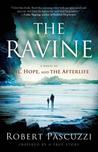
The Ravine: A Novel of Evil, Hope, and the Afterlife

The Ravine: A Novel of Evil, Hope, and the AfterlifeThe Ravine: A Novel of Evil, Hope, and the Afterlife by Robert Pascuzzi
My rating: 3 of 5 stars

This a novel about forgiveness. Even though I did not agree with all of the theology in the book is was a good read.The story involves two brothers who are start football players in high school. After high school and the lights dim they turn to crime. The get caught and sent to prison. Prison changes the two brothers. One learns to trust God and changes his life, the other allows his heart to get header and just plays the system. The story really begins after they get parolled from prison.  Robert Pascuzzi, the author, started each chapter with a quote. I always enjoy quotes at the beginning of chapters. I have them all listed below and a few other quotes from the book as well. Enjoy!

There are some who bring a light so great to the world that even after they have gone the light remains.  ~Author Unknown

Lord, help us realize that everything that happens to us happens for a reason. Help us realize that every sorrow or setback we experience can be transformed into a blessing, if we but trust in you. Help us realize that if we trust you, all things – even tragedies – will work out for our good.  ~Robert Pascuzzi

Life changes in an instant. The ordinary instant.  ~Joan Didion

God dislikes evil. And no happiness can be built on hate. Love one another as brothers.  ~Josephine Baker

But I have promises to keep, and miles to go before I sleep.  ~Robert Frost

Fame is a bee.
It has a song-
It has a sting-
Ah, too, it has a wing.  ~Emily Dickinson

Our lives are the sum total of the choices we have made.  ~Wayne Dyer

What’s done cannot be undone.  ~William Shakespeare

Brief is life, But love is long   ~Lord Alfred Tennyson

Grief teaches the steadiest minds to waver.  ~Sophocles

The trust of the innocent is the liar’s most useful tool.  ~Stephen King

Deep into that darkest peering,
Long I stood there,
Wondering, fearing   ~Edgar Allan Poe

Go out into the darkness,
And put your hand into the hand of God.  ~Minnie Louise Haskins

To love and win is the best thing;
To love and lose, the next best.  ~William Makepeace Thackeray

If in Christ we have hope in this life only, we are of all people most to be pitied.  ~1 Cor. 15:19

We cannot do great things on this earth, only small things with great love.  ~Mother Teresa

My mind is like a bad neighborhood; I try not to go there alone.   ~Anne Lamott

God whispers to us in our pleasures, speaks in our consciences, but shouts in our pains.  ~C.S. Lewis

Let us forgive each other; only then will we live in peace.  ~Tolstoy


View all my reviews


To order a copy of this book click here!

Monday, March 23, 2015

41: A Portrait of My Father

41: A Portrait of My Father41: A Portrait of My Father by George W. Bush
My rating: 5 of 5 stars

This is an awesome read. Even though I did not always agree with either of the Bush's policies as Presidents, they are people that I admire. Both Bush families have good hearts and I think they both know Jesus as their Savior. I have a few quotes for you to consider. The first is George W. telling you what made him think to write this book:

A few months after we left (George W. Bush), Laura and I invited Tim Lawson and his wife, Dorie McCullough Lawson, to our ranch in Crawford, Texas. I had commissioned Tim - a real artist, not an amateur like me - to paint some scenes of the landscape we love. As Tim observed the native prairie grasses and live oaks on the property, Dorie and I talked about her father, David McCullough. I told her that a highlight of my presidency had been meeting her dad, the fine historian and Pulitzer Prize - winning biographer of John Adams. After updating me on her father's health and projects, Dorie said, "You should know that one of my father's greatest regrets in studying John Adams is there was no serious account of him by his son John Quincy Adams." She knew, of course, my connection to John Quincy: We are the only sons of Presidents who have served as President ourselves. "For history's sake," she said, "I think you should write a book about your father."

Over the years, I suspect there will be many books analyzing George Herbert Walker Bush, the man and his presidency. Some of those works may be objective. This one is not. This book is a love story - a personal portrait of the extraordinary man who I am blessed to call my dad. I don't purport to cover every aspect of his life or his years of public service. I do hope to show you why George H. W. Bush is a great President and an even better father.

Only two times in American history has a President been sworn in with both his parents on hand to witness the moment. The first came in 1961, when Joseph and Rose Kennedy watched their son take the oath of office from Chief Justice Earl Warren. The second came in 2001, when my parents attended my inauguration.

After their fifty-fourth anniversary, my parents had passed John and Abigail Adams to claim the title of longest-married presidential couple. They are now just a few months away from extending their record to seventy years.

When my second term ended in 2009, I was fortunate to become the first President to leave office with both parents alive.


Don't be misled my the quotes I chose. This book is about George H.W. Bush. I selected the quotes above for two reasons, I thought they were interesting and I had not known the information before reading the book.

If you are interested in history, then I highly recommend this book!


View all my reviews

To order this book click here!

Saturday, March 14, 2015

Truth Seeker

The Truth Seeker (O'Malley, #3)The Truth Seeker by Dee Henderson
My rating: 5 of 5 stars

Excellent book. I've read several of Dee Henderson's books and enjoyed them all. I guess they are really for women, but honestly I enjoy a good story especially when the gospel is incorporated into the story. My Mom actually had just read the book and passed it to me knowing I love to read mysteries. The book is about a family, the O'Malleys, that are not related by blood. They all grew up as foster kids, but became close and decided to change their last name so they could be a family. This book is classified as a romance novel and it does has romance in it but also has mystery. If you enjoy reading Christian fiction you will enjoy all of Dee Henderson's books.


View all my reviews


To order this book click here!

Wednesday, November 26, 2014

The Last Ounce of Courage

"The Last Ounce of Courage" is an excellent movie. I will at some point get the rooftop quote and add it to this blog. If any of you know where I may get it besides rewatching the movie please let me know.


n

I looked everywhere for this speech and could not find it, so I rewatched the movie and transcribed it. Enjoy and be inspired!

The Rooftop Speech

As you probably heard, I am no longer the mayor of this town. So, tonight I stand here a freedom fighter. This country was founded by freedom fighters, men and women, who loved their country and their Creator.  Four hundred years ago our forefathers left the religious oppression of another land to build this one. And the first thing they did, the first thing they did was to put a cross on the shores of the Atlantic, but it was more than a cross. It was a symbol that in this land a citizen has the freedom to worship, as he or she desires or the freedom not to worship at all. My fight isn’t about colored lights or a tree on the city square. My fight is about freedom and taking back what has been stolen from us.

We are losing freedoms one by one that our forefathers, our brothers in arms, and my son died for. It is time we stood up for what they died for, for what we believe in. Our rights are being destroyed perhaps forever. But don’t you see we are letting it happen, we’re asleep. We sleep and they come in like a thief in the night and they take what’s left.

WAKE UP! WE CAN’T SLEEP ANY MORE. WAKE UP AND LOOK AROUND YOU. LOOK AT WHAT’S COMING OVER THE HORIZON. WE CAN’T LET THE ENEMY TAKE ONE MORE INCH. NOT ONE MORE INCH. WE CAN’T BE SILENT ANYMORE. THE SILENCE HAS TO STOP! AND IT HAS TO STOP TODAY!


Young men and women are dying in foreign lands to preserve the freedoms that we enjoy e-v-e-r-e-y   s-i-n-g-l-e   day. Can you hear them? Just listen. It’s their voices from the graves. They are wondering if they died in vain. Do we dare diminish their sacrifice by our silence? Well, if your answer is “no” then you think about this: when history is written, will history say you stood by and you did nothing? Or will history say that you fought, you fought like those brave souls, you fought to preserve the memory of the young men and women that have given everything for this country and for you? We fight for freedom! We fight for freedom! We fight for freedom!

Please watch this movie and continue the fight for our freedom's in America!

The Family

The Family
Braves Game 2012